Royal ceremony and the king’s human reality
Henry VRoyal ceremony and the king’s human reality names a central tension in King Henry V’s reflections: the crown elevates its wearer in public, but does not remove his ordinary human senses, anxieties, or burdens. The play sets the authority of the king’s office against the vulnerable person who must inhabit it, showing that ceremony magnifies responsibility without granting peace.
Identity and Dramatic Setting
The contrast first emerges in a private exchange. King Henry V answers a question about whether the king has been told another man’s thoughts by insisting that the king remains a man like the person speaking to him. Their senses are alike: a violet smells the same to each, and the elements appear alike to each. The observation strips away the distance created by rank without denying that the king’s affections may be more elevated. Royal difference exists, but it does not cancel shared human conditions.
The play sharpens this point by distinguishing the king’s person from the ceremonies surrounding him. When those ceremonies are laid aside, he appears in his nakedness as a man. This is not simply a claim that kings have private feelings; it is a dramatic test of what remains when the visible signs of majesty are mentally removed. Rank shapes how others respond to him, but it cannot alter the basic conditions of his senses or make him other than human.
Ceremony and Its Costs
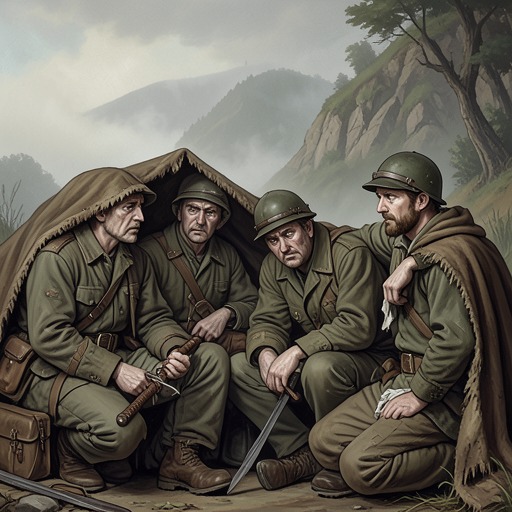
After the soldiers depart, King Henry V turns from the common humanity he has just described to the unequal burdens attached to kingship. The soldiers’ cry places their lives, souls, debts, careful wives, children, and sins upon the king, ending in the recognition that they must bear all. Their language makes royal responsibility extensive: the king is treated as the recipient of the people’s trust and as the person on whom their welfare and moral liabilities can be laid.
That responsibility is described as twin-born with greatness. The king’s position exposes him to the breath of every fool, while ordinary people feel most sharply the distress that belongs to their own immediate lives. The contrast is not that private people have no hardship, but that kingship adds a public burden to human vulnerability. King Henry V asks what kings possess that private people do not, and answers that the distinction is ceremony. In this account, ceremony is at once the visible privilege of the crown and the condition that separates its wearer from ordinary ease.
The meditation then tests the value of that privilege. Ceremony may command homage, but what it often receives instead is poisoned flattery. The king’s elevated position can therefore isolate him from honest comfort: being feared is less happy than living among those who fear. The trappings of authority promise distinction, yet the social performance surrounding them can prevent the king from receiving the straightforward affection that private people enjoy.
Sleep, Vigilance, and the Human Body
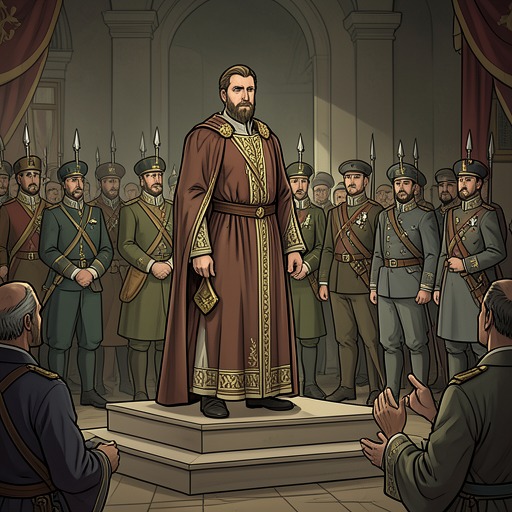
The contrast becomes most concrete in the comparison between royal display and sleep. The crown’s emblems—the balm, sceptre, orb, sword, mace, and imperial crown—together with the throne and the tide of worldly pomp, cannot give the king the sound sleep enjoyed by a wretched labourer. The list makes ceremony tangible, but its accumulation only strengthens the reversal: no abundance of royal objects can secure this ordinary bodily comfort.
The labourer, by contrast, follows the year through profitable work toward the grave, winding days with toil and nights with sleep. His life is not portrayed as free of labour or mortality; its advantage is that his work and rest are not interrupted by the king’s watch. He belongs to the country’s peace and benefits from it without understanding the vigilance required to maintain it. The king keeps watch so that the peasant may use the hours better. Thus the apparent privilege of the crown is set against the private person’s unselfconscious enjoyment of peace, while royal sleeplessness is presented as one of the costs of protecting that peace.
Kingship Under the Test of War
The dramatic sequence carries this inward account of responsibility toward the soldiers’ danger. After Sir Thomas Erpingham enters, King Henry V invokes the God of battles and asks that his soldiers’ hearts be strengthened rather than possessed by fear. The prayer does not erase the difference between king and subject; it shows the king exercising his public responsibility through concern for the men whose lives have been entrusted to him. His authority is accompanied by dependence: he asks for aid rather than presenting himself as sufficient to guarantee their courage or safety.
After the battle, his account of the English dead gives that dependence a further consequence. He names only a few men of distinction and reports that among the other men there are but five and twenty. Faced with the result, he attributes the victory to God’s arm alone, not to the English. The movement from prayer before battle to this attribution afterward frames kingship as responsibility without sole ownership of success: King Henry V leads and speaks for the army, yet refuses to make its victory simply his achievement.
The play’s treatment of ceremony therefore does not merely expose majesty as an illusion. The king’s office remains consequential: soldiers entrust their lives and families to him, and he keeps watch for the peace others enjoy. But the office does not make its bearer invulnerable, guarantee sleep, or remove the need for help beyond himself. By placing royal insignia beside ordinary senses, sleeplessness beside a labourer’s rest, and command beside prayer, the drama presents the crown as both authority and burden, sustained by a human being who cannot escape the conditions he shares with those he rules.